




Chrysler’s innovative Lithium-Sulfur battery tech holds promise, but it will be a while before it sees widespread adaptation.
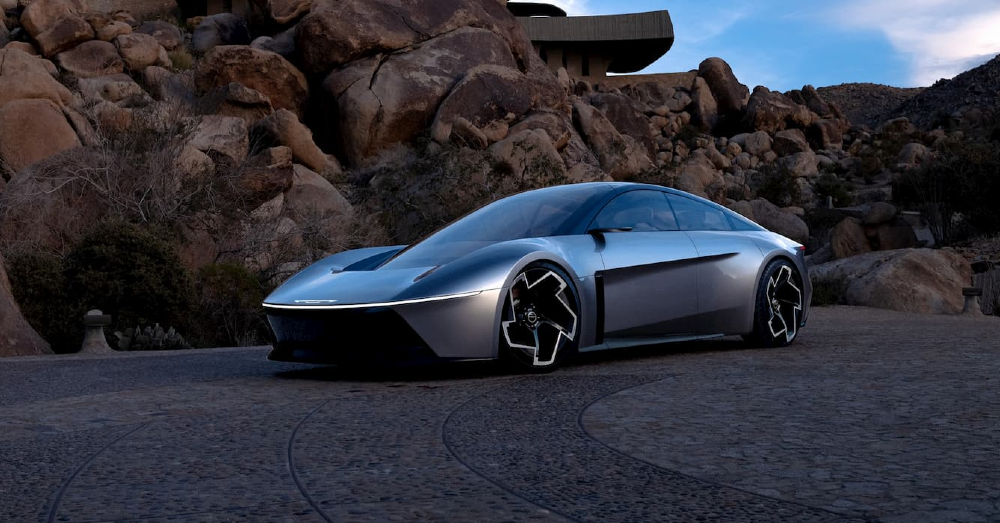
Chrysler recently unveiled their Halcyon Concept electric sedan, and, with it, a new type of battery. It’s an 800-volt pack containing lithium-sulfur cells, but this EV is quite far from hitting showroom floors at a Chrysler Dodge Jeep Ram dealer. The innovation carries the name Lyten cells and is estimated to carry a carbon footprint that is 60 percent smaller than today’s most environmentally friendly batteries.
These Lyten cells don’t utilize metals such as cobalt, manganese, or nickel. They use sulfur instead, and because sulfur is lower on the periodic table, the element is more energy-dense. This atomic lightness translates into less weight, but more power for batteries as a whole, and this is good news considering current battery-electric cars are much heavier than their ICE-powered counterparts. It’s also worth mentioning sulfur is the fifth most abundant element on Earth, mostly found in and around hot springs and volcanic regions.
This lithium-sulfur business came about due to Stellantis, parent company to Chrysler, investing in Lyten as they pursued 3D Graphene tech within the mobility industry. According to a press release outlining the partnership, “Stellantis Ventures, the corporate venture fund of Stellantis, announced an investment in Lyten to accelerate the commercialization of Lyten 3D Graphene applications for the mobility industry.” A main area of interest for Lyten is lithium-sulfur batteries.
Lithium-sulfur battery power is seen by some as the step forward, past the rather environmentally unfriendly lithium-ion, NMCA, and LFP seen batteries in today’s EVs. Haresh Kamath, director of energy storage at the Electric Power Research Institute (EPRI), recently commented on the sustainability of and goings-on regarding lithium-sulfur tech, “They are, [sustainable] and have been recognized as such for 30 years—but it’s likely to take years of steady work on the technology to [create] successful products, scalable manufacturing, and commercialization.”
Kamath continued, “There is no guarantee commercial lithium-sulfur products will be cost-competitive with lithium-ion. Mass commercialization will require us once again to address the big questions of fire and explosion hazards in a new technology that has important safety differences from lithium-ion. Taking any battery technology from the lab to the field is no joke: It requires a lot of capital investment and the wherewithal to successfully design, build, qualify, and scale up cells, then batteries, and then systems. This takes years. Even mature, knowledgeable, well-capitalized companies rarely hit their timelines.”
The EPRI director went on to explain that lithium-sulfur tech is not a plug-and-play replacement for current battery tech. Other potential issues arise, such as sulfur needing roughly twice the amount of battery cells to be as energetically viable as current batteries and lithium-sulfur having a generally poor life cycle.
Currently, lithium-sulfur battery technology is a long way away from being commercially viable. Chrysler has shown interest in the tech, but it’s very unlikely that we will see an EV with a lithium-sulfur battery at a Chrysler Jeep Dodge Ram dealer this decade.
This post may contain affiliate links. Meaning a commission is given should you decide to make a purchase through these links, at no cost to you. All products shown are researched and tested to give an accurate review for you.