





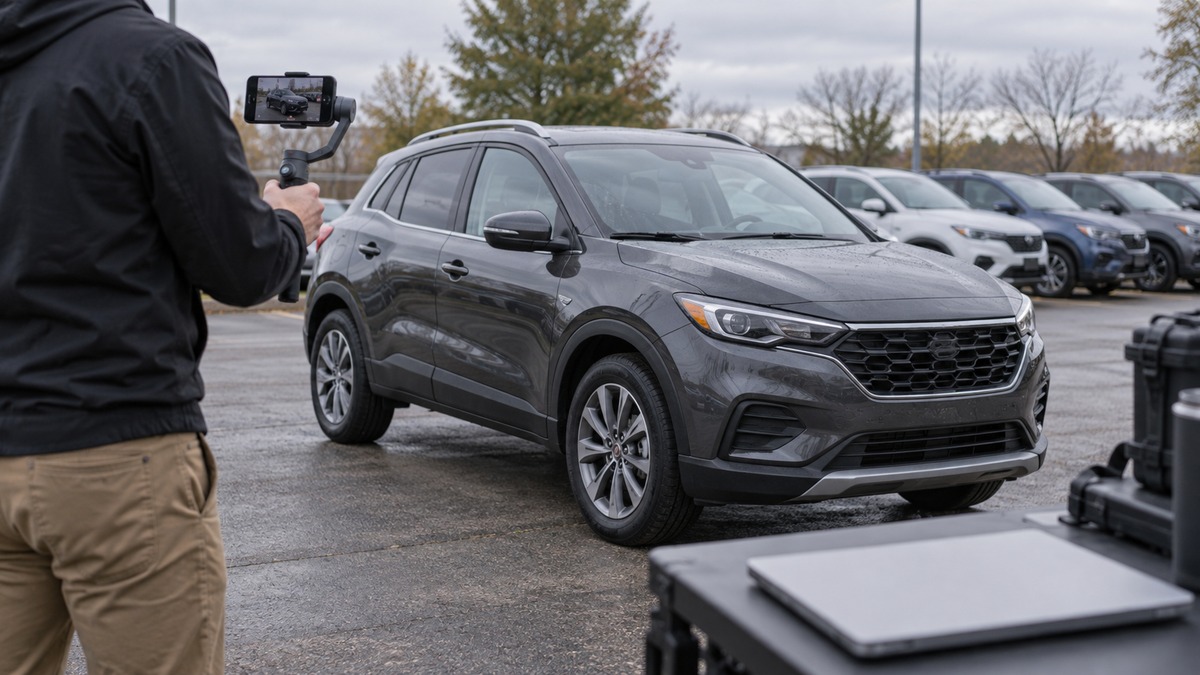
Dealer marketing teams need video for websites, ads, and social feeds, yet a new industry survey found it on only 38% of live vehicle listings. Producing enough clips while keeping inventory details current is the problem behind that gap.
- A survey of 250 auto retail marketing leaders found only 38% of live listings include a video asset.
- Changing inventory makes manual video production hard to keep accurate and current at scale.
- One pilot using AI-made video reported higher click-through rates and lower cost per lead.
A Big Gap Between Wanting Video and Having It
Video now appears across many of the places where shoppers research vehicles. It shows up on dealer websites, third-party listings, paid social feeds, email campaigns, and follow-up messages. So you might assume most cars for sale already come with a clip. They don’t. A nationwide survey of 250 chief marketing officers and digital marketing leads, commissioned by the automated video company Phyron, found that on average just 38% of live vehicle listings carry a video asset.
That number tells a simple story. Marketing teams believe in video. They just can’t make enough of it. Demand for content keeps climbing while the people and hours available to produce it stay flat. The result is a pile of listings that lean on static images because that’s all a busy team can realistically ship.
Why Video at Inventory Scale Is So Hard
The problem isn’t shooting one nice walkaround. Any team can do that. The problem is doing it for every car, on every channel, and keeping all of it current as stock turns over. A single vehicle might need different images, specs, finance messaging, branding rules, and current offers. Change any of those and the video needs a refresh too.
Now multiply that across a lot full of vehicles that sells and restocks constantly. Cars move. Prices shift. Promotions come and go. Each change can leave yesterday’s video out of date. For a large dealer group, keeping video accurate turns into a full-time operational grind rather than a one-time project. Phyron’s leadership frames the core issue plainly: dealers already grasp the value of video, and the hard part is scaling it when inventory never sits still.
Where AI Starts to Earn Its Keep
This is the spot where automation actually helps instead of just sounding good in a pitch. According to Phyron, AI works best here by removing the repetitive production bottleneck, not by replacing the marketing team. Automated production can help teams refresh videos as listings change. People still need to check the underlying images, vehicle details, and offers; faster output does not make incorrect inputs accurate.
The reported results back that up. In one pilot across a group of eight rooftops, Phyron says teams saw a 32.2% jump in click-through rate on Meta inventory ads and up to a 22.9% drop in cost per lead. The system also handled a workload that would have eaten hundreds of manual hours, generating and updating creative for hundreds of cars in under an hour. That kind of volume simply wasn’t possible by hand.
Phyron says it now works with more than 4,000 dealer customers across 35 countries, and that automated videos from those customers have topped 500 million views since January 2021. Big numbers, but the underlying point is small and practical. Reducing repetitive production gives a team more room to check the details and decide which vehicles need original footage.
What Shoppers Actually Get Out of It
For buyers, the kind of video matters. Genuine walkaround footage can show cabin space and visible wear, while a clip built from existing photos cannot reveal details those photos never captured. When comparing used SUVs for sale, ask whether a video shows the actual vehicle and whether it is recent. A polished presentation is useful, but it is no substitute for an inspection.
That’s the payoff dealers are chasing. A useful listing helps a buyer decide which questions to ask and whether a vehicle deserves a closer look. A video should serve that purpose, rather than simply add movement to an ad.
Turning the 38% Into Something Better
The takeaway for any dealer marketing team is honest and useful. Wanting video on every listing was never the hard part. The bottleneck has always been production capacity against inventory that refuses to sit still. Tools that build and refresh video automatically are starting to close that gap, and the survey suggests plenty of room to grow past today’s average. If most listings still show only photos, the ones that add reliable, current video have a genuine edge.
This post may contain affiliate links. Meaning a commission is given should you decide to make a purchase through these links, at no cost to you. All products shown are researched and tested to give an accurate review for you.