




Picking the right people-mover comes down to who sits inside it. A hotel airport run, a church outing, and a daycare pickup all ask different things from the same box on wheels, and the seating plan is where those differences show up first.
- Seat count and aisle access set the ceiling on how many riders you can move comfortably.
- Luggage room, door style, and roof height decide how easy loading and boarding really are.
- Accessibility rules and child-seat needs shape the floor plan before you ever pick upholstery.
Start With Seat Count and Aisle Access
Group vehicles fall into three broad shapes. Minivans handle 7 or 8 riders including the driver. Full-size models step up to 12 or 15 seats. Then there are the taller, longer cabins built more like a small bus, with high roofs and room to stand. Each shape carries a different crowd, so start by counting heads on a typical run and add a little cushion for busy days.
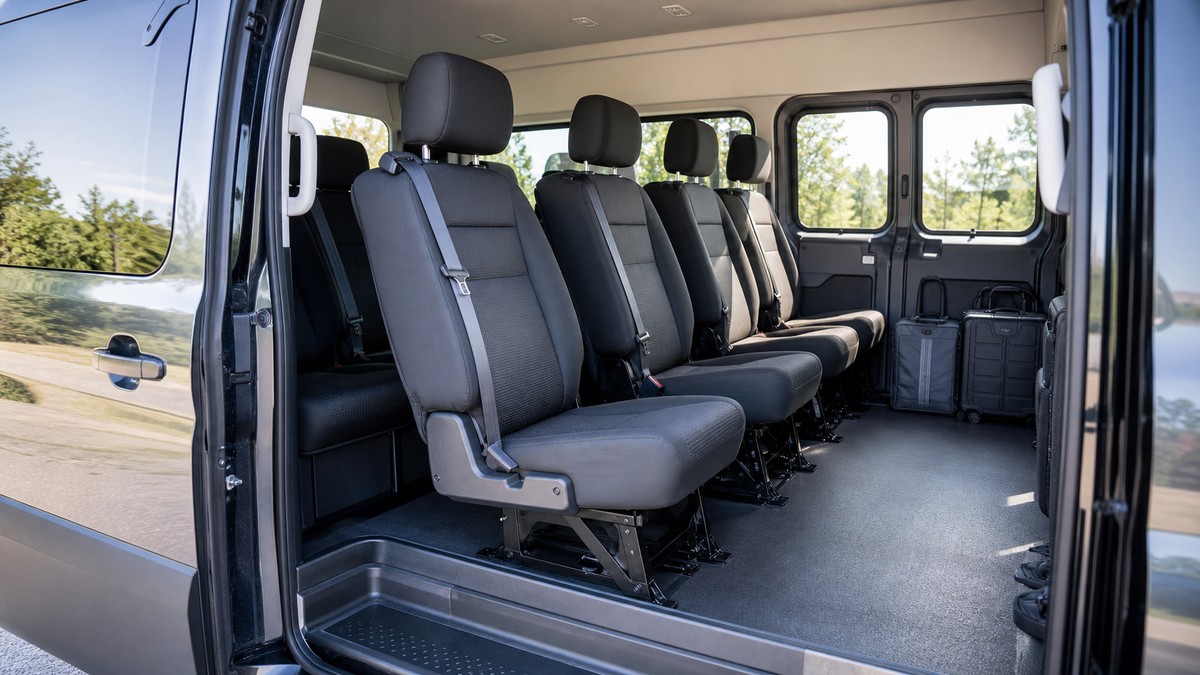
How people reach those seats matters just as much as how many there are. Many full-size layouts now include a center aisle, so riders walk back to an open seat instead of climbing over anyone already settled. That single design choice speeds up boarding at a curb or airport lane and cuts the awkward shuffle that slows a minivan with a packed middle row. If your route means frequent stops with people getting on and off, aisle access earns its keep fast.
Luggage, Doors, and Getting In and Out
Riders rarely travel empty-handed. Airport shuttles haul suitcases, work crews bring gear, and field trips arrive with backpacks and coolers. Most full-size and minivan layouts let you pull the rear bench for extra cargo room, and the way that seat comes out is worth checking. Quick-release seats lift out in minutes. Seats bolted to the floor take real effort every time. If you swap between hauling people and hauling stuff often, insist on the quick-release setup.
Door style shapes the daily grind too. Side doors either slide open or swing out as double doors, and the back can use swing-out doors or a single hatch that lifts up. Sliding doors shine in tight parking, while wide swing doors make loading bulky bags simpler. Roof height plays in as well. A standard roof keeps the vehicle low and garage-friendly, while a raised roof lets many riders walk in upright rather than ducking, which helps older passengers and anyone carrying a child.
Accessibility and Child-Seat Realities
Accessibility obligations depend on the service you operate and the regulations that apply to it, so they need to be checked early. The U.S. Access Board sets federal guidelines for vehicles used in transportation service, covering doorway clearance, ramp width and slope, interior space for a mobility device, and how firmly a wheelchair securement system must hold. Those requirements drive the floor plan. A van fitted with a ramp or lift usually gives up a seat or two, and the securement area needs a clear path that does not fight with your aisle. Plan that space early rather than bolting it on later.
Families bring their own math. Car seats and boosters need seats with proper belt geometry and enough depth to sit flat, and the same wide doors and low step-in that help wheelchair users also make buckling a child far less of a workout. Bench seats fit more child seats side by side, while individual captain’s chairs give a calmer ride with clearer footing between rows.
Wheelbase and the Life Your Van Will Live
Wheelbase and roof height tie the whole decision together. A longer wheelbase adds cabin length for more rows or deeper cargo behind the last seat, and taller builds trade garage clearance for standing headroom. The Mercedes-Benz Sprinter, for example, comes in 12 or 15 seat versions with a choice of standard or raised roof, which shows how one nameplate stretches to fit very different jobs.
Match those specs to how the vehicle actually earns its keep. Tight city loops reward a short, nimble minivan with good fuel economy. Long airport hauls with luggage favor a longer cabin and a walk-in aisle. Public routes with mixed riders push you toward accessible upfits and roomy doors. Trim details like cloth, vinyl, or leather, plus carpet or a hose-out vinyl floor, follow the same logic. Pick for the passengers and the miles, then let comfort and materials round it out.
Turn Your Route Into a Floor Plan
Write down a normal day before you shop. Count riders, note the luggage, mark the stops, and flag any accessibility or child-seat needs. That short list turns a wall of options into a clear pick. The best group van is simply the one whose seating, doors, and dimensions fit the people you move most.
This post may contain affiliate links. Meaning a commission is given should you decide to make a purchase through these links, at no cost to you. All products shown are researched and tested to give an accurate review for you.