




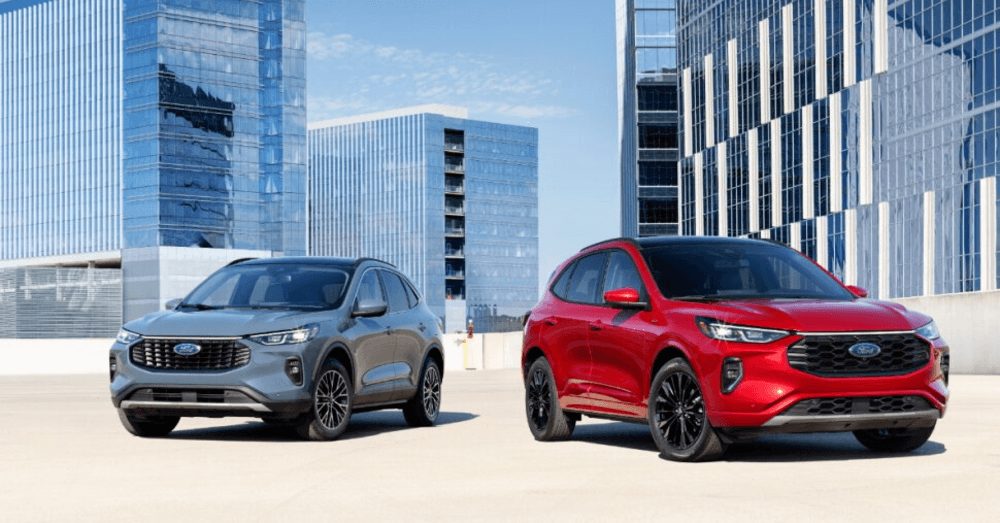
Shopping for a fuel-sipping Ford Escape but stuck choosing between the standard Hybrid and the Plug-In Hybrid? You’re not alone. Both share the same friendly footprint and tech-loaded cabin, but they take very different routes to saving you money at the pump.
- The Escape Hybrid never needs a plug and offers optional all-wheel drive.
- The Escape PHEV adds 37 miles of electric-only range and more horsepower, but only comes in front-wheel drive.
- Pricing, charging access, and your typical commute length should drive the decision.
Powertrains and Performance
Both models lean on the same gas engine foundation, but the electrons make all the difference. The Escape can be had in hybrid and plug-in hybrid form, with the latter offering an EPA-estimated 37 miles of electric driving range. Both use a 2.5-liter four-cylinder engine and a continuously variable automatic transmission. The regular hybrid has a total system output of 192 hp and can be had with FWD or AWD. The PHEV makes 210 total hp and comes only with FWD.
That extra muscle in the PHEV comes courtesy of a bigger battery. The 2025 Ford Escape PHEV is powered by a 2.5L four-cylinder engine paired with an electric motor and a 14.4-kWh lithium-ion battery. Together, they produce a combined 210 horsepower and 155 lb-ft of torque. The trade-off? The Escape PHEV weighs about 765 pounds more than the Escape hybrid, which brings mixed blessings. On the one hand, the extra poundage likely contributes to the PHEV’s slightly more compliant ride. But while the Escape is one of the more agile small SUVs, the PHEV’s added weight takes a small bite out of its handling responsiveness.
Fuel Economy and Electric Range
If you can plug in at home, the PHEV makes a strong financial argument. The 2025 Escape Plug-In Hybrid gets an EPA-estimated 101 MPGe in combined city/highway driving in electric/hybrid mode and 40 mpg combined in gas/hybrid mode. That means short commuters might rarely visit the gas station, while longer road trips still get hybrid-level efficiency.
Charging is straightforward. You can top off the 14.4-kWh battery using the standard 3.5-kW onboard charger in about 3.5 hours with a 240-volt (Level 2) outlet. If you’re stuck with only a 120-volt household plug, expect roughly 10.5 hours.
The standard Hybrid skips the plug entirely. It recharges automatically while you drive, so there’s nothing to remember at night. Ford notes the Hybrid can return over 40 mpg in the city, making it an easy win for renters or apartment dwellers without garage charging.
Trims, Features, and Price
The Hybrid is offered across several configurations, including ST-Line and Platinum. The plug-in hybrid trim, on the other hand, keeps things simple. The PHEV comes in a single trim that includes 18-inch wheels, heated front seats, a heated steering wheel, and a 13.2-inch touchscreen. A Premium package adds many safety, comfort, and technology features.
Pricing reflects that battery upgrade. The 2025 Ford Escape PHEV has a starting MSRP of $39,895, a $2,100 reduction from the previous year’s model. By comparison, the least-expensive 2025 Ford Escape is the ST-Line 4dr SUV (2.5L four-cylinder gas/electric hybrid EVT), which arrives with an MSRP of about $32,490 including destination charge.
One catch worth knowing: because of updated battery sourcing rules, the 2025 Escape Plug-In Hybrid is no longer eligible for the $3,750 federal tax credit as of May 2025. Lease options may still offer savings.
Practicality and Drivetrain Choices
Live somewhere snowy? Drivetrain availability could be the deciding factor. The standard Ford Escape Hybrid offers optional all-wheel drive. The Plug-In Hybrid is available exclusively with front-wheel drive. Towing is identical between the two when properly equipped, with both able to pull up to 1,500 pounds, on par with what you’d expect from a plug-in compact SUV focused on efficiency.
Matching the Right Escape to Your Driveway
Pick the Hybrid if you want a lower upfront cost, all-weather AWD traction, and zero charging hassle. Pick the PHEV if you have a charger at home, your daily commute fits inside that 37-mile electric window, and you want quicker acceleration. Either way, you get a quiet, well-equipped compact SUV that sips fuel far more politely than the standard turbocharged Escape. Test drive both back to back if you can. The differences sound subtle on paper, but they feel pretty distinct from behind the wheel.
This post may contain affiliate links. Meaning a commission is given should you decide to make a purchase through these links, at no cost to you. All products shown are researched and tested to give an accurate review for you.